Questions
Frequently Asked Questions
What kinds of sensitive-area eczema do you treat?▾
In these areas we commonly treat:
- Atopic dermatitis in the skin folds
- Irritant and allergic contact dermatitis from detergents, wipes, fragrance, and pads
- Friction and moisture irritation in folds that stay covered
- Seborrheic dermatitis in the groin
- Lichenified patches that have thickened from long-term scratching
- Sweat- and friction-triggered flares under clothing and waistbands
Within this area, your formula can target:
- Genital area
- Groin & inner thigh
- Buttocks
- Under breasts
We treat sensitive areas only alongside eczema elsewhere on the body. We may not be able to treat cases involving only the genital area, only the scalp, or more than 70% of your body. Those cases currently require in-person care.
Why do sensitive areas need a different cream than my hands or arms?▾
This is the thinnest skin we treat, and it spends the whole day covered. A skin fold behaves like a bandage: it traps heat and moisture and holds whatever you apply directly against the skin, which pushes absorption far above what the same cream would do on a forearm. That means a formulation strong enough for your palms can cause real damage here, including thinning and stinging, while a standard body cream is often too irritating in a different way. Your Curex formula is compounded at a strength these areas tolerate, in a base chosen not to burn.
Can I get this on its own, without treating anywhere else?▾
No. Sensitive areas are prescribed only as part of a plan that also treats eczema on at least one other part of your body. Eczema that appears only in the genital area can have causes that need an in-person exam to rule out, so those cases fall outside what we can safely handle over telehealth. If that's your situation, we'll tell you during the quiz and point you toward in-person care rather than sell you a plan.
Who is eligible?▾
Curex treats adults and kids aged 2 and older, in all 50 states. For sensitive areas specifically, you also need eczema present on at least one other part of your body. Take our free quiz to find out if you or your child is eligible for our eczema treatment program.
How does the treatment process work?▾
Take the free quiz so we can see if the program is a fit. Our onboarding team will help create your chart and gather key details. Photos are optional, they go into your confidential medical chart, and they're seen only by your clinical team. You'll be connected with a clinician who will review your history and recommend a treatment plan. If you agree with the plan, your medication is prepared and shipped in plain packaging from our pharmacy, sometimes as early as the day you take the quiz.
What medications might be prescribed?▾
Your Curex clinician may recommend steroidal and/or non-steroidal topicals, and sometimes anti-infectives. For sensitive areas this commonly includes lower-potency options such as Hydrocortisone, Desonide, Tacrolimus, Pimecrolimus, and Ceramide barrier cream, with non-steroidals doing most of the work. The exact prescription depends on your age, the specific spots affected, severity, and medical history.
How much does it cost?▾
Your eczema plan is $75/month, billed monthly, and you can cancel anytime. Your medication refill ships every 2 months, so a single shipment covers two billed months. That one price includes your online clinician visit, prescriptions, and shipping. Because sensitive areas are always treated alongside at least one other area, each area after the first is $60/month. There's a 30-day money-back guarantee.
Do you use topical steroids, and how do you avoid overuse?▾
This matters more here than anywhere else on the body, because thin skin is where long-term steroid use causes thinning fastest. Our clinicians use steroids in short, defined courses when a flare needs to be brought down quickly, then move you onto a non-steroidal maintenance formula as soon as it's reasonable. You have 24/7 clinician oversight throughout, so nothing runs open-ended without review.
How soon will I see results?▾
Our goal is to stop your flare up in the first month, and patients treating sensitive areas often notice the itching and burning easing within the first couple of weeks. Skin that has thickened from long-term scratching takes longer to settle than surface redness. After our clinical team reviews your medical history and affected areas, they can give you a realistic timeline, since results are different for everyone.
Will it sting, or feel heavy in a skin fold?▾
It shouldn't. Formulas for these areas are compounded in a light base meant to absorb rather than sit in a fold, since anything occlusive tends to make moisture-related irritation worse. Delicate skin also reacts to preservatives and alcohols that most people never notice elsewhere. If your formula stings, feels heavy, or leaves marks, message your specialist and they can change the base without changing what's actually treating you.
Can I still exercise and sweat normally?▾
Yes. You don't need to stop working out. Sweat, friction, and damp fabric are among the biggest triggers in these areas, so your clinician will give you a routine built around your real week, including when to apply relative to training, what to change about underwear and workout fabric, and how to get the area dry without scrubbing it.
Do I have to send photos of a private area?▾
Photos are optional. Many patients are treated on history and description alone, and your clinician will tell you if an image would genuinely change the plan. Anything you do send goes into your confidential medical chart under HIPAA, is visible only to your clinical team, and is never used in marketing. We don't publish patient photos of these areas anywhere on this site.
What states do you serve?▾
Curex is available in all 50 states. Our licensed clinicians can treat patients anywhere in the US.
Do you accept HSA/FSA?▾
Yes, Curex accepts HSA and FSA payments for eligible expenses.

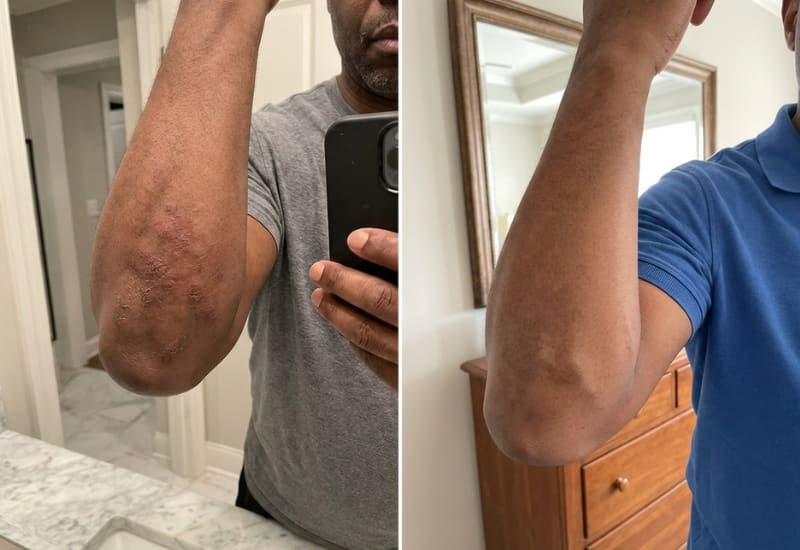
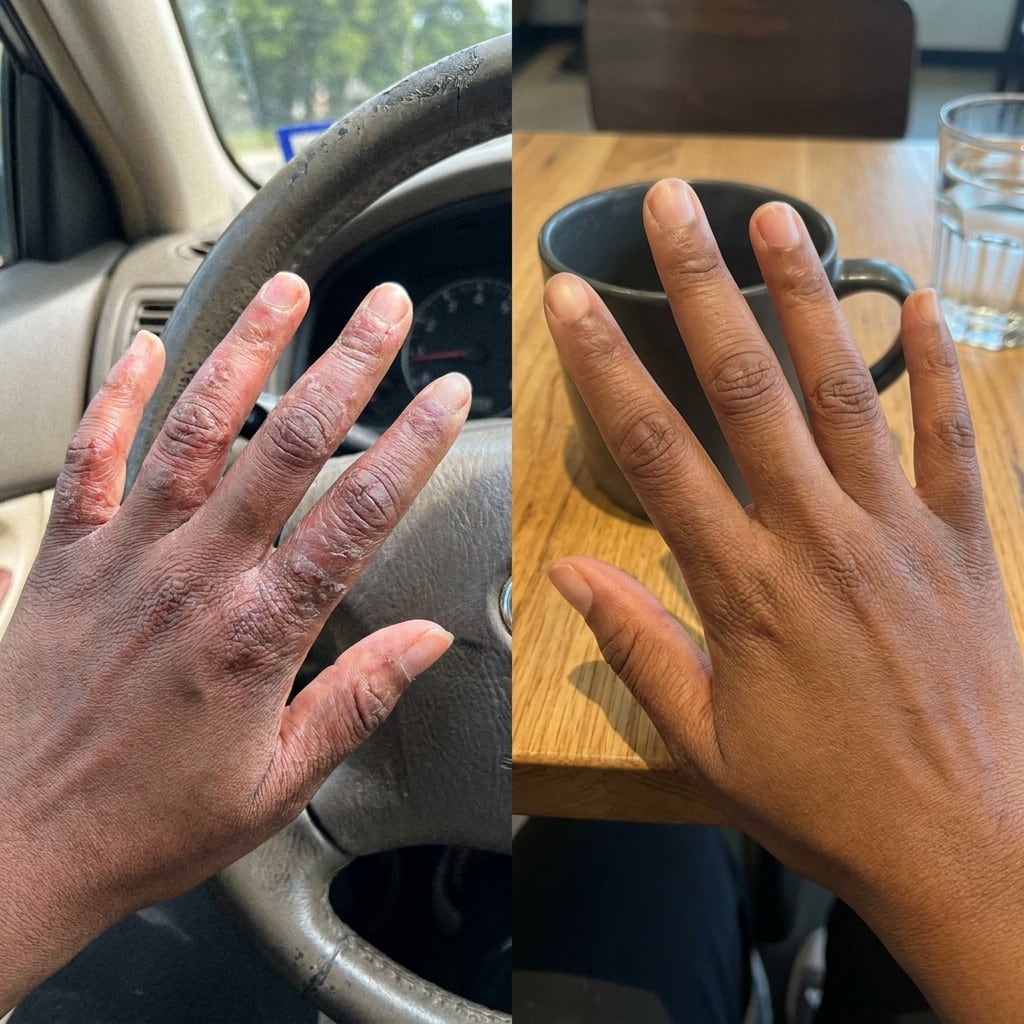
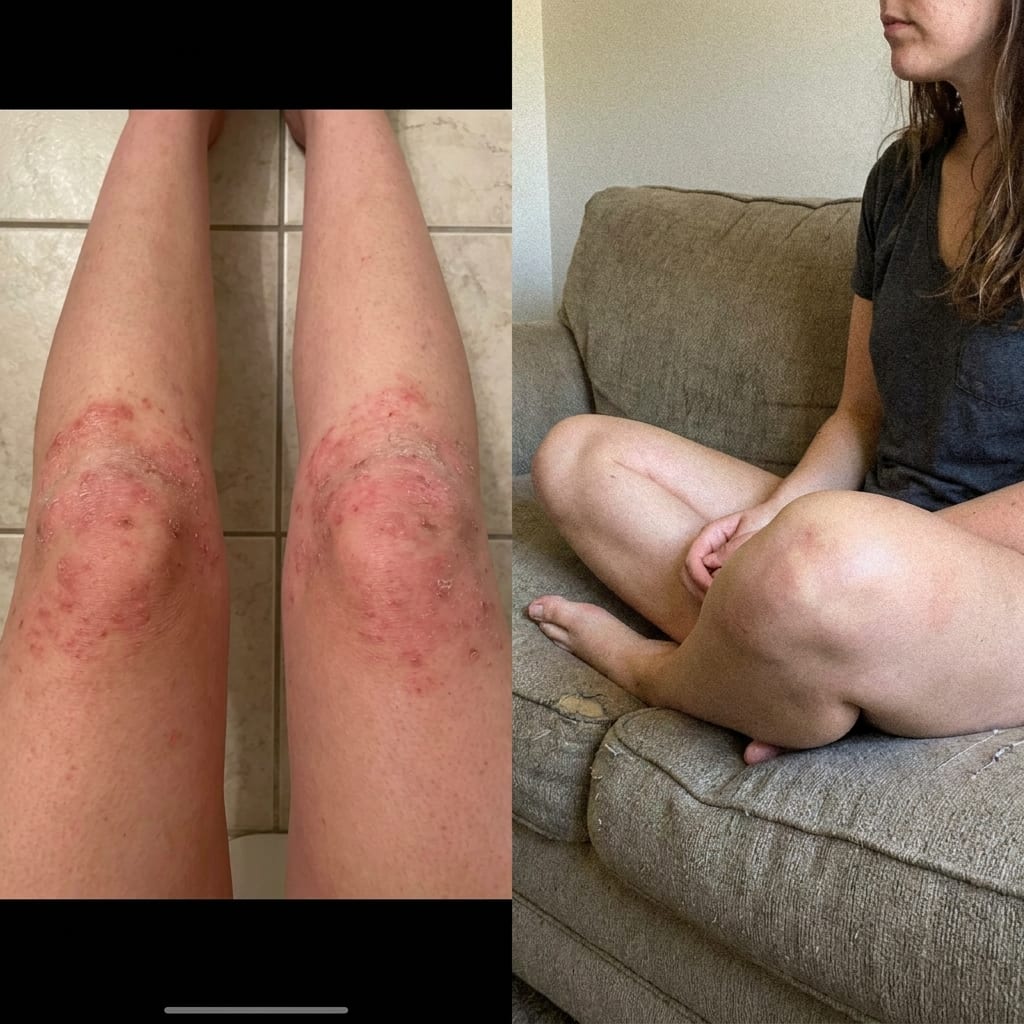
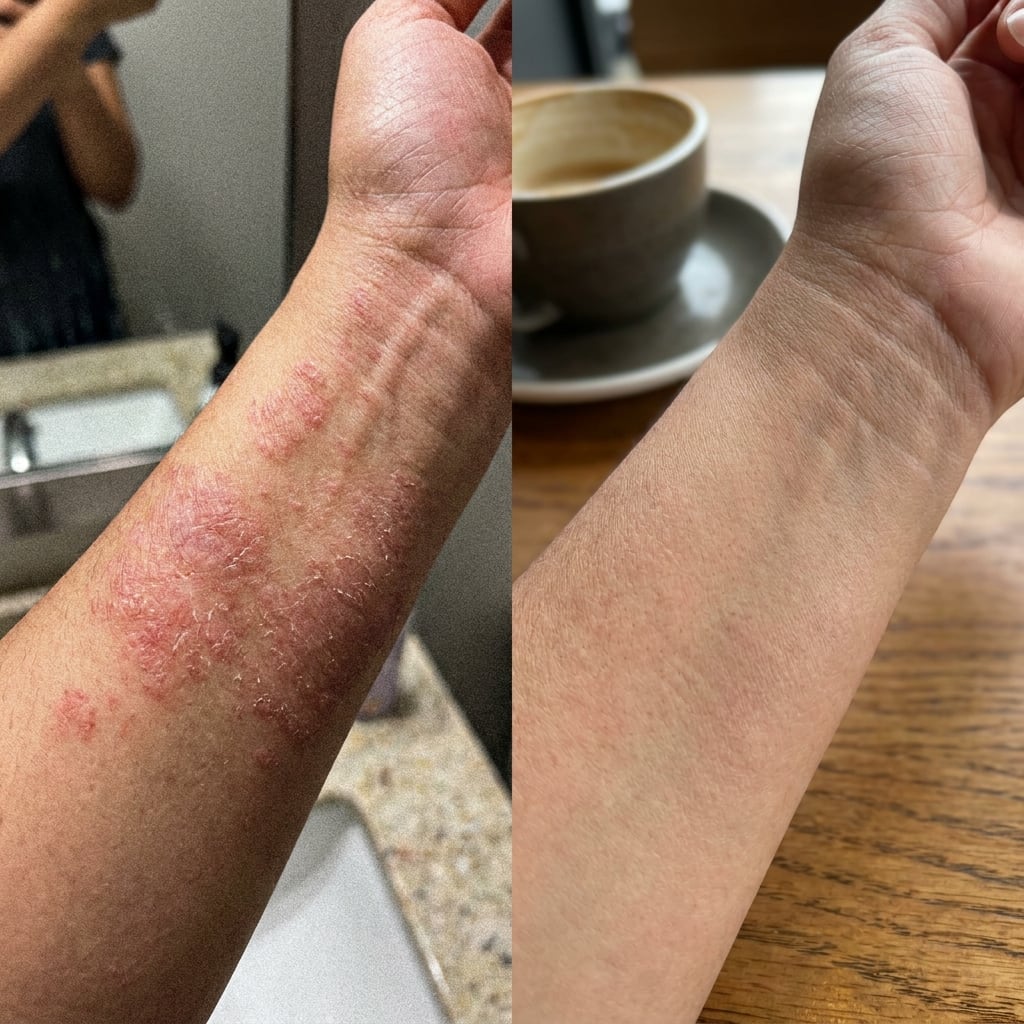
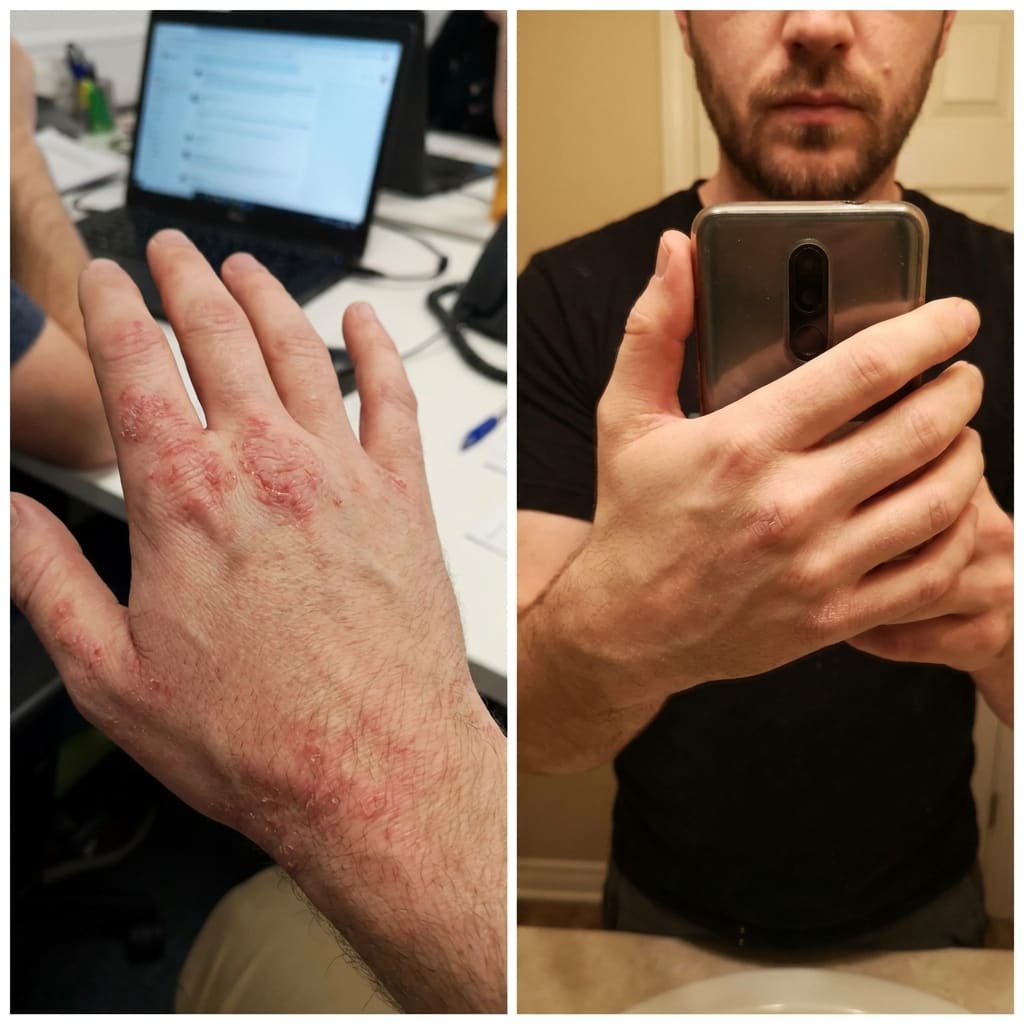
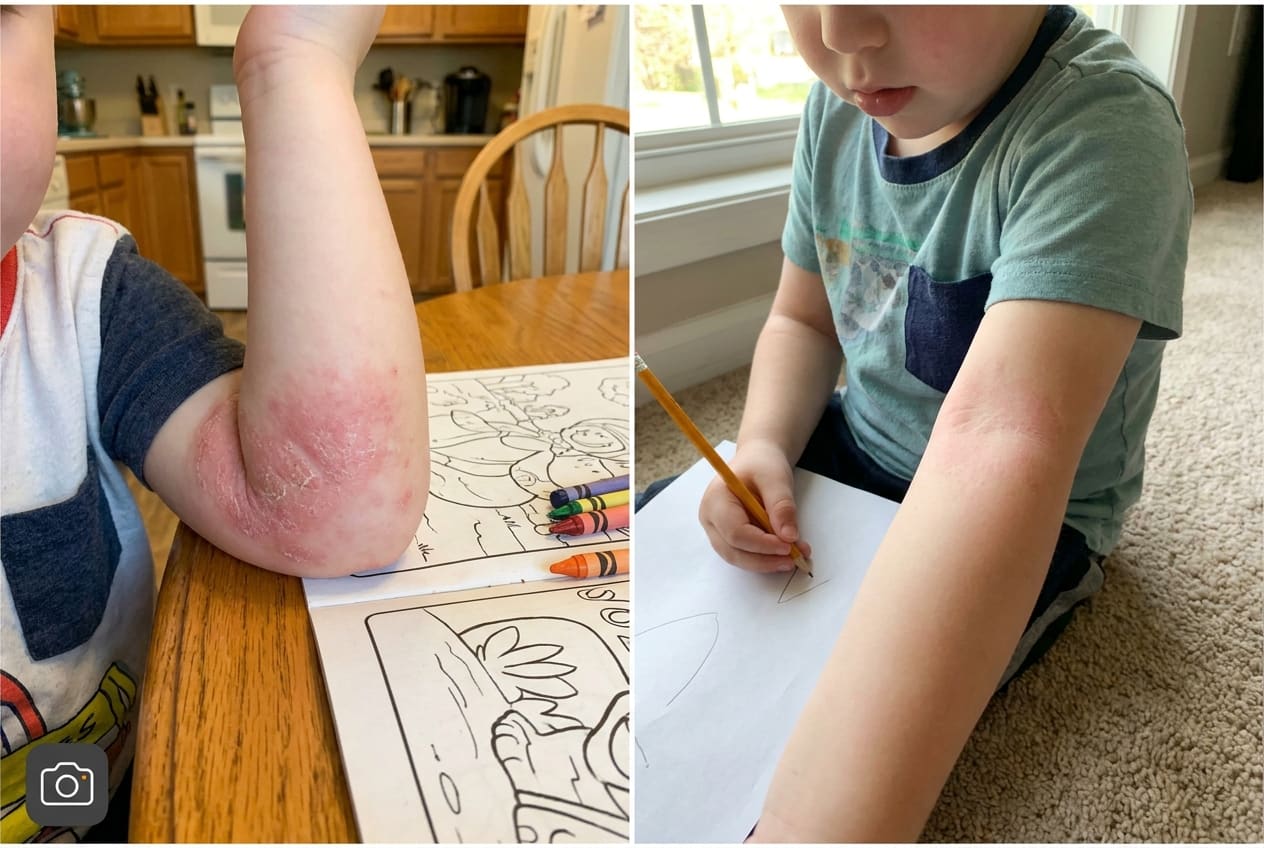
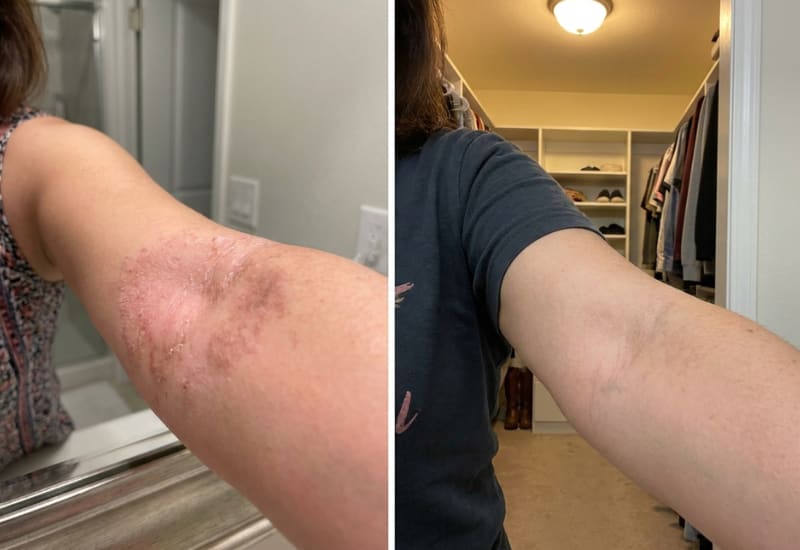 ✓ Controlled 3 wks
 Treatment:
Arms Eczema Solution
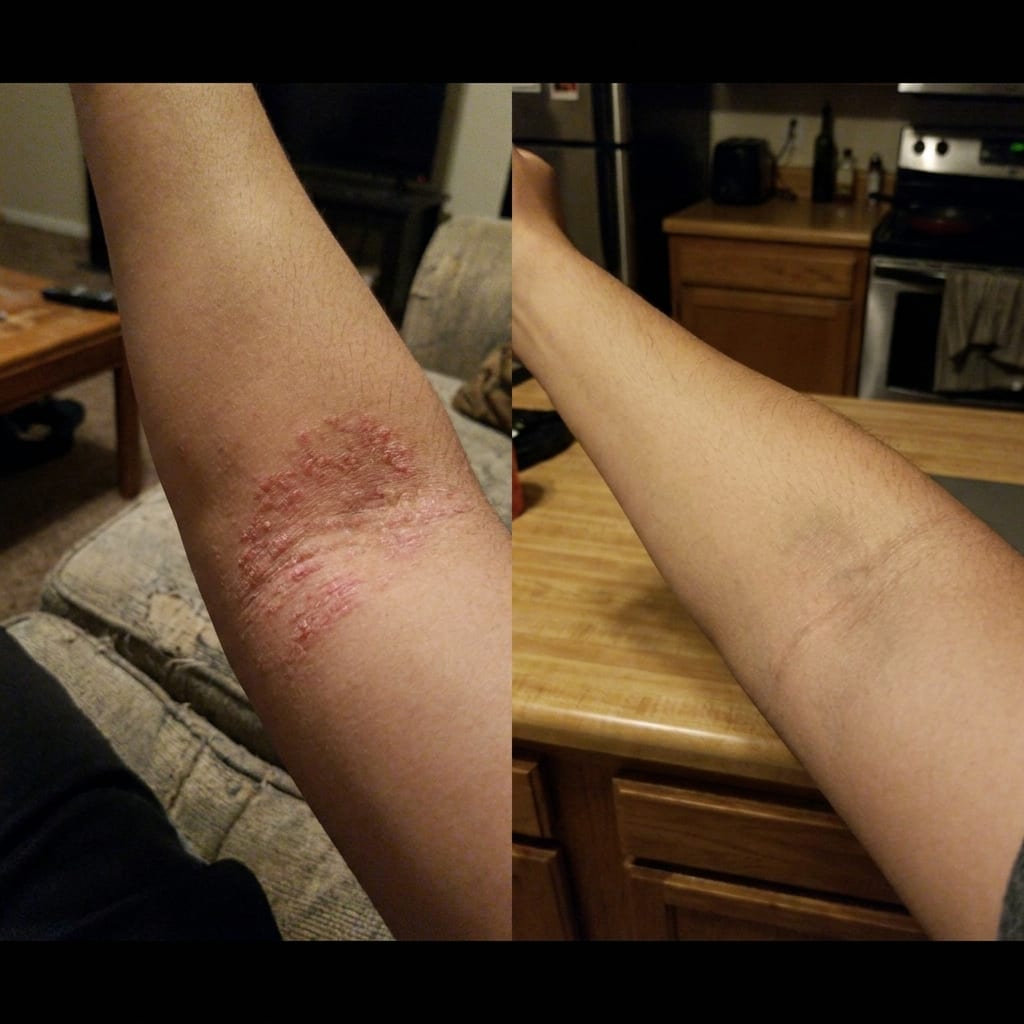
Treatment:
Arms Eczema Solution