


Allergy shots
vs Allergy drops
Which is right for you?
Discover the key differences between allergy shots (subcutaneous immunotherapy, or SCIT) and allergy drops (sublingual immunotherapy, or SLIT).
We'll break down the pros and cons, with a focus on why allergy drops offer a more convenient, safe, and effective option for many patients seeking long-term relief from allergies.
Swipe left or right to see more

Why People Love Allergy Drops?
No Needles, No Waiting Rooms
Administer treatment at home in just minutes. Simple, convenient,
and stress-free.
Easier to Stick With
Fits seamlessly into busy schedules with a quick daily routine and minimal disruptions. Patients are 3x more likely to complete treatment compared to shots, boosting your chances of long-term desensitization.
Personalized Dosing
Custom compounded to target your exact allergies for optimal results.
Pharmacy Preparation
Prepared by licensed pharmacists
in a controlled environment, ensuring consistency and safety.
Travel and Restart-Friendly
Flexible for life's interruptions—pausing doesn't mean restarting from square one.
Covers Most Allergies
Effective for inhalant allergies (like pets, pollens, dust mites, molds) and all major food allergies.
Ideal for Kids and Needle-Averse Patients
Gentle under-the-tongue delivery with minimal side effects, making it well-tolerated by all ages.
Affordable Savings
Curex patients may pay less per year than for in-clinic shots, depending on insurance coverage, compared to allergy shots—real value without compromising care.
Proven Results
Backed by protocols successfully used by Allergychoices, the pharmacy that fills Curex prescriptions, for more than 300,000 patients, delivering reliable, life-changing outcomes.
Table of Contents
Treatment Overview
Preparation of Treatment
Treatment Administration
Duration of Treatment
Safety
Efficacy
FDA Approval
Insurance Coverage
Price and Patient Costs
Why Choose Allergy Drops?
Treatment Overview
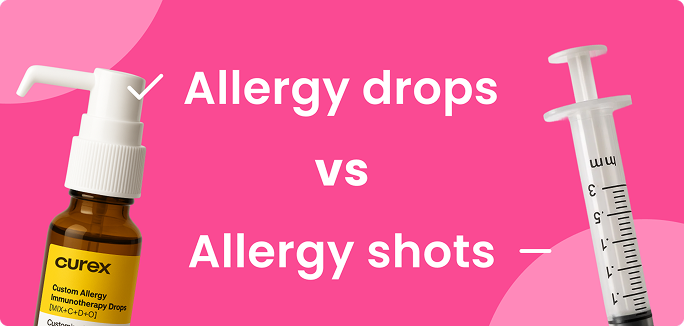
Allergy drops deliver the same allergens via simple under-the-tongue drops. They're just as effective, but with greater convenience, making them easier to stick with for lasting results.
Allergy shots involve injecting allergen extracts under the skin to build tolerance over time. They're effective but require frequent clinic visits and carry some risks.

Preparation of Treatment
Shots are prepared in the clinic or by a compounding pharmacy to the prescriber's specification.
Drops can be prepared in-clinic or at a specialized pharmacy such as Allergychoices, the leading allergy immunotherapy pharmacy; Curex and Allergychoices are partner companies. Pharmacy compounding ensures precise, calibrated dosing for optimal effectiveness—giving you peace of mind and better outcomes.

Treatment Administration
Drops are self-administered at home: just place under your tongue for 1-2 minutes and let it absorb. Buildup takes about 3 months, with no office visits needed for dosing.
Shots require injections in a doctor's office. The buildup phase demands multiple weekly visits for months, followed by monthly maintenance. Due to anaphylaxis risk, you must wait 30 minutes post-shot.

Duration of Treatment
Both aim for 3-5 years to achieve long-term tolerance, with relief often starting in the first year. Some may continue longer for sustained benefits.
If you pause shots, you typically restart from scratch. Drops allow easy resumption, making them more flexible for real-life interruptions.
Safety
Drops may cause mild tongue itching, with virtually no anaphylaxis cases—making severe reactions rare, though not impossible; an epinephrine plan is still standard.
Shots can cause local reactions like redness and swelling at the injection site, plus rare but serious anaphylaxis risks requiring epinephrine and monitoring.
.png)
Efficacy
Studies show similar results for both when followed consistently. However, patients on drops are 3x more likely to complete treatment due to convenience, leading to higher success rates overall.

FDA Approval
Both use FDA-licensed allergen extracts. Shots use them by their labelled route; customized drops are prescribed off-label, and only four single-allergen sublingual tablets are FDA-approved.
Drops use the same extracts; while specific tablets (e.g., for dust mites) are FDA-approved, custom combinations are safely compounded by pharmacies—a standard, physician-trusted practice for personalized care. Custom combinations are not reviewed by the FDA.
Insurance Coverage
Drops are compounded medications, typically not covered. Online or in-person doctor visits and allergy testing are covered. To determine affordability, you have to evaluate your out-of-pocket responsibility.
Shots qualify as medical procedures (office injections), so they're often covered by insurance—but expect copays and significant patient responsibility if you have deductibles.

Price and Patient Costs
Drops plus any clinic fees, often total $39-$99/month at published prices—more predictable and affordable without insurance surprises.
Shots In-clinic allergen immunotherapy typically costs $3,000-$5,000/year including testing, visits and extract. Typical first-year out-of-pocket with insurance: copays of about $10-$40 across 25-50 visits; without insurance, the full amount.

Why Choose Allergy Drops?
Allergy drops stand out for their convenience, safety, and adherence rates. No needles, no waiting rooms—just effective relief on your terms. If you're tired of allergy symptoms disrupting your life, drops may be the route you can actually keep for 3-5 years. The full evidence and cost comparison, with sources, is at getcurex.com/learn/allergy-drops-vs-shots. Consult your doctor to see if they're right for you!