
Is the Arabian Mau Cat Hypoallergenic? A Low-Data Landrace and the Fel d 1 Rule
No. The Arabian Mau is not hypoallergenic. It scores 4.0 out of 10 — the same as the Abyssinian — because its short single coat with no undercoat sheds little, earning a dispersal advantage. But this is a low-confidence page: the Arabian Mau is a WCF/EFF landrace breed with the sparsest published trait data in this bundle. Low shedding is not low Fel d 1.
11 peer-reviewed sources
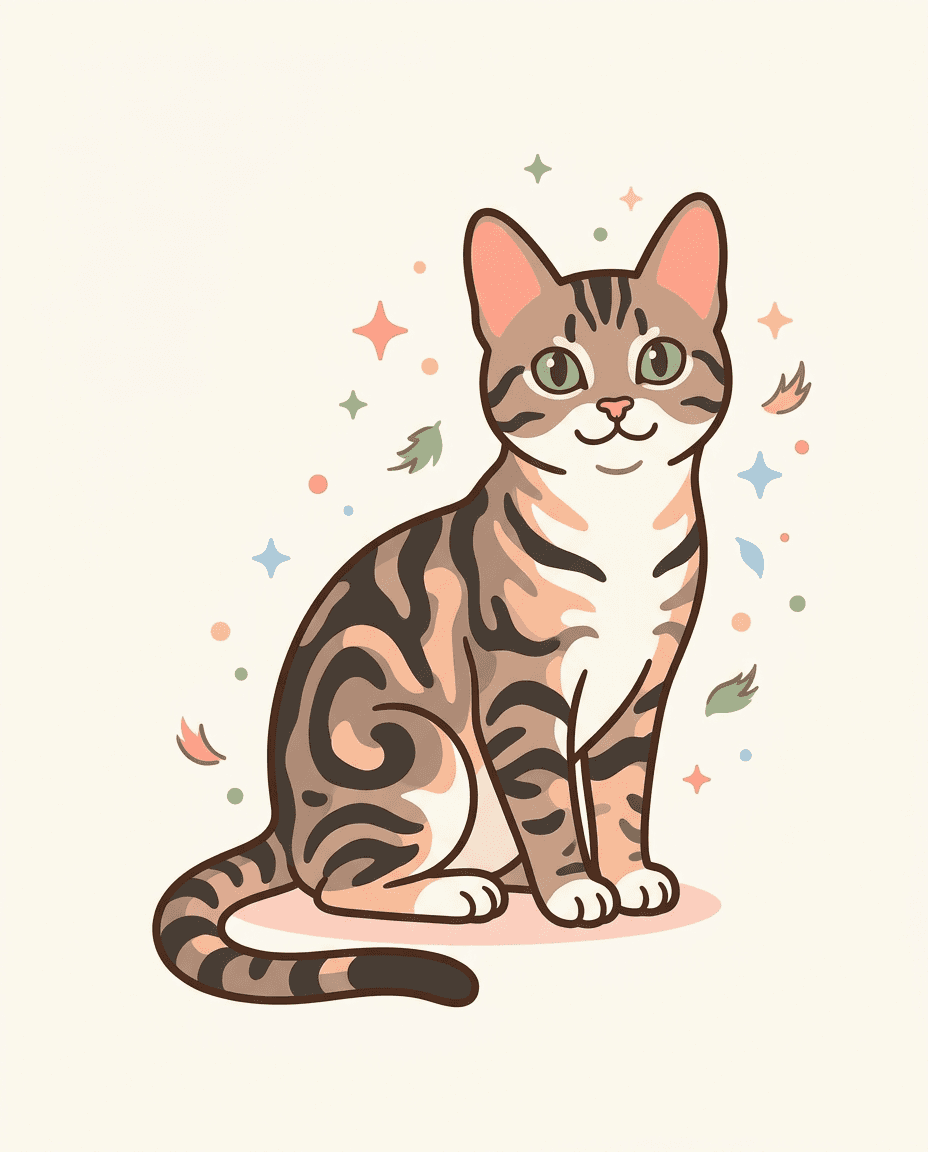 Cat breed
Key facts
The Arabian Mau is a natural desert landrace recognized by the WCF and EFF — not the CFA — with limited published breed-trait data.
Low shedding disperses less dander but does not lower a cat's Fel d 1 production — it still makes it in its saliva and skin glands.
About 90–96% of cat-allergic people are sensitized to Fel d 1, which every cat produces regardless of coat or breed.
Salivary Fel d 1 varies more than 80-fold between individual cats — for a data-sparse breed, the individual animal matters more than the breed average.
Cat allergen (Fel d 1) is detected in 99.9% of US homes, including those without a cat.
There is very little published data on the Arabian Mau, so I would treat any breed-level allergy claim cautiously and focus on the individual cat. What does not change is the biology: it is a cat, it produces Fel d 1, and a low-shedding coat does not make it hypoallergenic. Test the person and spend time with the specific animal.
How we got to this score
The Curex Hypoallergenic Score isn't a gut call. It's a weighted sum of five measurable factors — here's exactly how this breed scored on each.
A low-shedding short single coat earns the Arabian Mau a 4.0 dispersal score — but breed-level data is very thin, confidence is low, and Fel d 1 production is the universal cat baseline. The individual animal matters more than any breed estimate for this breed.
No cat breed is 100% hypoallergenic — every cat produces Fel d 1; breeds differ only in how much allergen they shed into your home and how easily you can keep it out of your air.
| Factor | Weight | Allergen-friendliness | Score |
|---|---|---|---|
| Allergen productionAll cats produce Fel d 1 regardless of breed or coat — the Arabian Mau is no exception (Sparkes, J Feline Med Surg 2022; ACAAI). | 40% | 2 out of 10 | 2/10 |
| SheddingAnalyst-estimated shedding 2/5 — LOW CONFIDENCE; based on WCF breed standard descriptions of a short single coat with no undercoat (WCF breed standard; Catster; CatTime). | 20% | 5 out of 10 | 5/10 |
| DanderLow shedding on a medium 7–16 lb frame keeps dispersed dander mass low — LOW CONFIDENCE analyst estimate. | 15% | 5 out of 10 | 5/10 |
| Saliva spreadAnalyst drool 1/5 — Arabian Maus are not known as droolers; saliva-borne Fel d 1 reaches the coat through self-grooming, reward capped at 6. | 15% | 6 out of 10 | 6/10 |
| GroomabilityAnalyst grooming 1/5; weekly brushing sufficient — the single coat with no undercoat clears loose dander efficiently (WCF descriptions; CatTime). | 10% | 5 out of 10 | 5/10 |
| Weighted composite score | 4/10 | ||
How the Curex Hypoallergenic Score works
The Curex Hypoallergenic Score is an editorial rubric. The hypoallergenic score rates a cat from 1 to 10, where 10 represents the lowest realistic allergen burden for an allergic household. It is a transparent editorial rubric — not a lab measurement of any individual cat. Each score combines breed-trait data from CFA/TICA coat descriptions and named veterinary references (CFA and TICA do not publish 1–5 numeric scales as the AKC does for dogs — all cat ratings are analyst estimates) and allergen-biology research from peer-reviewed studies on Fel d 1. Five factors are weighted. Allergen production carries 40 percent because Fel d 1 output is the biggest symptom driver and the factor owners can least control. Shedding is 20 percent, dander 15 percent, saliva spread 15 percent, and groomability 10 percent. For the Arabian Mau, all trait inputs are LOW CONFIDENCE analyst estimates anchored to WCF/EFF breed standard descriptions. The Arabian Mau is not recognized by the CFA or in all TICA registries, and published breed-trait data is the sparsest of any cat in this dataset. The shedding and dander estimates of 5 out of 10 each are based on the WCF's description of a short single coat with no undercoat — reasonable order-of-magnitude estimates, but not precision measurements. Readers should treat the Arabian Mau's 4.0 score with more uncertainty than any other breed in this bundle. The score reflects exposure potential, not your personal sensitivity, and the individual cat's biology carries more weight here than for any pedigree cat.
| Factor | Weight | A 10/10 means |
|---|---|---|
| Allergen production | 40% | All cats produce Fel d 1 regardless of breed or coat — the Arabian Mau is no exception (Sparkes, J Feline Med Surg 2022; ACAAI). |
| Shedding | 20% | Analyst-estimated shedding 2/5 — LOW CONFIDENCE; based on WCF breed standard descriptions of a short single coat with no undercoat (WCF breed standard; Catster; CatTime). |
| Dander | 15% | Low shedding on a medium 7–16 lb frame keeps dispersed dander mass low — LOW CONFIDENCE analyst estimate. |
| Saliva spread | 15% | Analyst drool 1/5 — Arabian Maus are not known as droolers; saliva-borne Fel d 1 reaches the coat through self-grooming, reward capped at 6. |
| Groomability | 10% | Analyst grooming 1/5; weekly brushing sufficient — the single coat with no undercoat clears loose dander efficiently (WCF descriptions; CatTime). |
Each factor is scored 1–10 (10 = lowest allergen burden), then weighted and summed to a single 1–10 score. Every breed is scored on the same model, so the rankings form one consistent dataset.
A desert landrace with thin data — but the Fel d 1 rule still applies
The protein behind most cat allergies is Fel d 1, a roughly 35-kilodalton secretoglobin produced in a cat's sebaceous, salivary, and anal glands — not in the hair. After grooming, Fel d 1 coats the fur and sheds into the environment on small, buoyant particles; about 60 percent of airborne Fel d 1 rides on particles under 5 microns (Satyaraj et al., Allergy 2019), keeping it suspended and inhalable. Around 90–96 percent of cat-allergic people are sensitized to it (Sparkes, J Feline Med Surg 2022). These facts apply to every cat on earth, regardless of breed, ancestry, or registry recognition. The Arabian Mau is a natural breed — a desert landrace originating in the Arabian Peninsula — recognized by the World Cat Federation (WCF) and the European Federation of Felines (EFF), but not by the CFA. Published breed information in veterinary and allergy literature is essentially absent; the scoring model's trait estimates are derived from WCF breed standard language describing a short, close-lying single coat with no undercoat, plus general secondary sources (Catster, CatTime). These are low-confidence estimates, not measured values. What is not in doubt is the biology: like every other cat, the Arabian Mau produces Fel d 1 in its sebaceous and salivary glands. The WCF-described low-shedding coat gives a plausible dispersal advantage — less shed hair in the environment per day — but this is a dispersal estimate, not a production claim. Bastien et al. (J Feline Med Surg 2019) found that salivary Fel d 1 varies more than 80-fold between individual cats regardless of breed. For a data-sparse landrace breed, the specific animal's biology dominates any breed average.
“Short-haired or non-shedding breeds are safe because there’s less hair.”
The allergen is a microscopic protein in dander, saliva and skin oils. Hair is just the carrier.
Where the allergen comes from
Overall load for this breed: Moderate
- DanderLow
The short single coat with no undercoat sheds little — dander dispersal is estimated as low, but this is a LOW CONFIDENCE estimate for a data-sparse breed.
- SalivaModerate
Self-grooming spreads saliva-borne Fel d 1 across the coat; Arabian Maus are not known as droolers.
- Skin/sebumModerate
Sebaceous glands produce Fel d 1 continuously regardless of breed origin or coat structure.
- UrineLow
A minor route; the primary allergen exposure routes from the Arabian Mau are coat/dander and saliva.
The allergen-relevant traits of the Arabian Mau, scored — low-confidence estimates
All Arabian Mau trait ratings are LOW CONFIDENCE analyst estimates derived from WCF breed standard descriptions and secondary sources — the sparsest data of any cat in this bundle. The Arabian Mau has no CFA registration, no widely published 1–5 scale trait data, and very little veterinary literature. Treat the scores below as order-of-magnitude estimates for a cat with a short, close-lying single coat and no undercoat — not as precision measurements. A higher score means friendlier for allergies.
Shedding
LowWCF describes a short single coat with no undercoat — shedding estimated as low (analyst 2/5), LOW CONFIDENCE (WCF breed standard; Catster; CatTime).
Dander
LowLow estimated shedding on a medium 7–16 lb frame suggests low dispersed dander — but the data is sparse and individual variation is the real driver.
Drooling
LowNot known as droolers; saliva-borne Fel d 1 reaches the coat through grooming rather than slobber.
Grooming needs
LowWeekly brushing estimated as sufficient for this coat type; single coat with no undercoat clears dander efficiently (analyst estimate 1/5; WCF; CatTime).
Coat type
LowShort, close-lying single coat with no undercoat — the least-shedding coat type in this dataset, similar to the Abyssinian.
A higher allergy-friendliness score means the trait contributes less allergen to your home. Levels reflect each trait’s relative contribution to exposure — not grooming convenience.
Confirm it’s really a pet allergy.
Symptoms blamed on a pet are often pollen, dust mites, or mold. A simple at-home test from Curex measures your specific IgE to dog and cat allergens — so you treat the right trigger instead of guessing.
Take the allergy quizWhat it really costs an allergic Arabian Mau owner
The Arabian Mau's estimated low-maintenance single coat keeps grooming costs at the bundle's minimum — a weekly brush at home. The primary added costs for an allergic owner are the standard filtration and allergen-reduction tools. Because the breed is rare in the US, obtaining one may involve additional costs (breeder, shipping, import) beyond the allergy-management budget below. Confirm with your source whether the specific cat has been socialized indoors, which affects how much allergen it deposits in your home's key living areas.
HEPA air purifier(s)
$180–$230 upfront per unit, $50–$70/yr filtersA room-sized unit in the bedroom and main living area; the estimated low shed rate means a single quality unit per room is likely sufficient. Replace filters every 6–12 months.
Grooming supplies
$60–$150/yr suppliesWeekly brushing with a soft brush or chamois; allergen wipes (Allerpet) between sessions. A non-allergic household member should handle brushing when possible.
Anti-Fel d 1 diet (optional)
$35–$60/moPurina Pro Plan LiveClear reduced active Fel d 1 on cat hair and dander by an average 47% by week 10 (Satyaraj et al. 2019). For an estimated low-shed cat, combining LiveClear with the coat type is a promising approach. A 16-lb bag runs about $75 at Chewy.
Allergy-friendly flooring
$1,000–$5,000 one-timeReplacing bedroom and main living area carpet; even a low-shedding cat deposits allergen into soft furnishings over weeks and months.
HVAC and vacuum upgrades
$150–$500 + $50–$120/yr filtersHigh-MERV HVAC filters and a sealed HEPA vacuum to avoid resuspending settled cat allergen.
Owner allergy medication
$60–$240/yrDaily OTC second-generation antihistamine and nasal steroid spray for ongoing baseline control.
Ranges are rough estimates for budgeting only and vary by region, home size, and how reactive you are.
Who the Arabian Mau realistically suits — with honest data-scarcity caveats
The Arabian Mau presents a unique suitability question: the breed's estimated dispersal profile is among the better in this bundle, but the data supporting that estimate is the thinnest of any cat here. An allergic prospective owner cannot rely on breed-level claims for the Arabian Mau the way they might for a CFA-registered breed with decades of documented trait data. Suitability depends primarily on your personal sensitivity level, the specific cat's individual biology (sex, neuter status, Fel d 1 output), and the individual animal you are considering adopting. For a data-sparse natural breed, spending time with the specific cat before committing — and getting your IgE levels tested — is more informative than any breed estimate. The management strategies below apply equally to any short-coated, low-shedding cat.
Mild allergy
People with mild, well-controlled cat allergy may find the Arabian Mau's low-shedding coat a manageable starting point — but this is an estimate based on sparse breed data, not a promise. HEPA filtration, a strict pet-free bedroom, and weekly grooming by a non-allergic household member are the minimum measures. Testing the specific cat for Fel d 1 before adopting is strongly recommended.
Moderate to severe allergy
Moderate-to-severe cat allergy is not reliably managed by coat type, especially for a data-sparse breed like the Arabian Mau. Even if the dispersal estimate proves accurate for your individual cat, Fel d 1 production stays at the universal cat baseline. Medical evaluation before adopting is essential.
Kids & asthma
Households with asthmatic or eczema-prone children should consult an allergist before adopting any cat, including the Arabian Mau. The breed's limited published data makes it impossible to give reliable breed-level allergy guidance beyond the universal cat biology. If a child already wheezes, get them assessed first.
Can you build tolerance? (immunotherapy for cat allergy)
Environmental management and a low-shed coat reduce how much Fel d 1 reaches you, but they do not change how your immune system responds. Allergen immunotherapy (AIT) is the only treatment that addresses the underlying mechanism — retraining the immune response away from the allergic IgE pathway toward tolerance. For cat allergy, the evidence base is the strongest in pet-allergy medicine. Varney et al. (Clin Exp Allergy 1997) found that subcutaneous cat SCIT reduced exposure symptom scores from 61.6 to 17.1 versus no change in placebo (64.7 to 62.1). Álvarez-Cuesta et al. (Allergy 2007) found cat sublingual SLIT reduced natural-exposure symptoms by 62 percent compared with placebo. These results meaningfully exceed the typical 25–30 percent relative improvement of aeroallergen SCIT. Real-world experience with the at-home sublingual route is consistent: a real-world Curex study of 2,897 patients on at-home sublingual immunotherapy (Tharpe et al., Frontiers in Allergy, 2026, peer-reviewed) found clinically meaningful symptom improvement rose to 45% of patients by two years, with quality-of-life improvement reaching 90.7%, adherence over 90%, and no anaphylaxis reported. No FDA-approved cat-specific SLIT tablet exists in the US — pet AIT is off-label as aqueous SCIT injections or sublingual drops. A typical course runs three to five years, with gradual improvement over months. A pet-specific five-year follow-up found that objective bronchial sensitivity can drift back toward baseline after stopping. AIT is not a cure, outcomes vary, and it should be supervised by an allergist. For an Arabian Mau owner whose lower-shedding cat means environmental measures are nearly effective, AIT may provide the sensitivity reduction needed for fully comfortable cohabitation.
If you are confirmed cat-allergic and want to keep your Arabian Mau, Curex connects you with allergist-supervised immunotherapy for pet allergy — a long-term option that targets your sensitivity rather than relying on the cat's low shedding. No price is listed here take the online eligibility quiz to see which option fits your situation.
Immunotherapy may provide long-term relief but is not a guaranteed cure; outcomes vary and treatment is prescribed after a board-certified allergist review.
How to live with an Arabian Mau if you are allergic
Managing an Arabian Mau when you are allergic follows the same principles as managing any low-shedding short-coated cat — with the added caveat that there is very little breed-specific data to rely on. With so little breed-level data, the individual cat and your own sensitization matter most — so confirm the cat is your trigger. Curex offers at-home allergy testing that measures your Fel d 1 IgE. Once confirmed, the standard low-shedding cat management plan applies: source control, HEPA filtration, and allergen-reducing diet.
- 01
Test before assuming the breed is safe
Get a specific IgE test to confirm your allergen before adopting. For a data-sparse breed like the Arabian Mau, breed-level estimates carry high uncertainty — the specific cat's sex, neuter status, and individual biology are far more predictive of your exposure than any breed average.
- 02
Spend time with the specific cat before adopting
If possible, spend one to two hours in close proximity to the specific Arabian Mau you are considering before committing. Note any symptom onset; this is more informative than any breed estimate for a natural landrace breed with minimal published trait data.
- 03
Keep the bedroom strictly pet-free
Maintain a pet-free bedroom at all times, wash bedding weekly in hot water above 130°F, and consider a mattress allergen cover. Even a low-shedding cat deposits allergen in any space it occupies regularly.
- 04
Run HEPA filtration in occupied rooms
A true HEPA purifier in the bedroom and main living area captures airborne Fel d 1. For an estimated low-shedding cat, one unit per key room typically provides adequate coverage; run continuously.
- 05
Brush weekly and consider LiveClear
A weekly brush by a non-allergic household member removes loose dander efficiently. Purina Pro Plan LiveClear (the anti-Fel d 1 IgY diet) reduced active Fel d 1 on hair and dander by an average 47 percent by week 10 (Satyaraj et al. 2019) — for an estimated low-shed cat, this dietary stack is particularly effective. Feed exclusively for at least three weeks to evaluate.
- 06
Replace soft allergen reservoirs
Hard flooring and wipeable furniture in the bedroom and main living area prevent the slow allergen accumulation that occurs in carpet and upholstered surfaces even from a low-shedding cat.
How the Arabian Mau stacks up against other cats
Scored on the same five-factor model, the Arabian Mau lands at 4.0 — the same as the Abyssinian, driven by identical shedding and dander estimates for a short single coat with no undercoat. The key difference between the two breeds is data confidence: the Abyssinian has decades of CFA/TICA documentation, while the Arabian Mau is a WCF/EFF landrace with sparse published trait data. Both share the same 4.0 dispersal score and the same 2 out of 10 production baseline.
| # | Breed | Verdict | Score |
|---|---|---|---|
| 1 | Balinesecat Semi-long single coat on the disputed lower-Fel d 1 list — reaches 4.5 via a production assumption the Arabian Mau page does not make. | Low-allergen at best | 4.5 |
| 2 | Abyssiniancat Short fine single coat, same score — the well-documented CFA/TICA reference breed for this coat type; higher data confidence. | Low-allergen at best | 4 |
| 3 | Arabian MauThis breedcat Short single coat, no undercoat — same dispersal score as the Abyssinian, reached via low-confidence estimates for a WCF/EFF landrace. | Low-allergen at best | 4 |
| 4 | Russian Bluecat Reaches 4.0 via a disputed lower-Fel d 1 production claim (production 3/10, Yu 2024) — same number, completely different driver from the Arabian Mau's dispersal-based score. | Low-allergen at best | 4 |
| 5 | Turkish Angoracat Semi-long single coat, slightly more shedding than the short single coat — sits between the Mau and the 3.0 dense-coated cats. | Low-allergen at best | 3.5 |
| 6 | Domestic Shorthaircat Mixed-ancestry, often double-coated — same low-data caveat but lower dispersal score. | Not hypoallergenic | 3 |
Semi-long single coat on the disputed lower-Fel d 1 list — reaches 4.5 via a production assumption the Arabian Mau page does not make.
Short fine single coat, same score — the well-documented CFA/TICA reference breed for this coat type; higher data confidence.
Short single coat, no undercoat — same dispersal score as the Abyssinian, reached via low-confidence estimates for a WCF/EFF landrace.
Reaches 4.0 via a disputed lower-Fel d 1 production claim (production 3/10, Yu 2024) — same number, completely different driver from the Arabian Mau's dispersal-based score.
Semi-long single coat, slightly more shedding than the short single coat — sits between the Mau and the 3.0 dense-coated cats.
Mixed-ancestry, often double-coated — same low-data caveat but lower dispersal score.
Higher score = lower realistic allergen burden. No breed reaches a true 10 — every dog and cat still produces allergen.
Curex Hypoallergenic Score finder
Search any popular breed and see its honest Curex Hypoallergenic Score — 10 means the lowest realistic allergen burden, 1 the highest. No breed is truly allergen-free.
32 breeds
| # | Breed | Verdict | Score |
|---|---|---|---|
| 1 | Bichon Frisedog | Among the friendlier breeds | Score 8 out of 10 |
| 2 | Poodledog | Among the friendlier breeds | Score 8 out of 10 |
| 3 | Maltesedog | Moderately friendly | Score 7 out of 10 |
| 4 | Moderately friendly | Score 7 out of 10 | |
| 5 | Schnauzerdog | Moderately friendly | Score 7 out of 10 |
| 6 | Moderately friendly | Score 7 out of 10 | |
| 7 | Balinesecat | Moderately friendly | Score 6 out of 10 |
| 8 | Havanesedog | Moderately friendly | Score 6 out of 10 |
| 9 | Shih Tzudog | Moderately friendly | Score 6 out of 10 |
| 10 | Siberiancat | Moderately friendly | Score 6 out of 10 |
| 11 | Cavapoodog | Low-allergen at best | Score 5 out of 10 |
| 12 | Cockapoodog | Low-allergen at best | Score 5 out of 10 |
| 13 | Cornish Rexcat | Low-allergen at best | Score 5 out of 10 |
| 14 | Devon Rexcat | Low-allergen at best | Score 5 out of 10 |
| 15 | Goldendoodledog | Low-allergen at best | Score 5 out of 10 |
| 16 | Labradoodledog | Low-allergen at best | Score 5 out of 10 |
| 17 | Low-allergen at best | Score 5 out of 10 | |
| 18 | Sphynxcat | Low-allergen at best | Score 5 out of 10 |
| 19 | Beagledog | Low-allergen at best | Score 4 out of 10 |
| 20 | Bengalcat | Low-allergen at best | Score 4 out of 10 |
| 21 | Russian Bluecat | Low-allergen at best | Score 4 out of 10 |
| 22 | Boxerdog | Not hypoallergenic | Score 3 out of 10 |
| 23 | Not hypoallergenic | Score 3 out of 10 | |
| 24 | Not hypoallergenic | Score 3 out of 10 | |
| 25 | Ragdollcat | Not hypoallergenic | Score 3 out of 10 |
| 26 | Not hypoallergenic | Score 2 out of 10 | |
| 27 | Not hypoallergenic | Score 2 out of 10 | |
| 28 | Not hypoallergenic | Score 2 out of 10 | |
| 29 | Maine Cooncat | Not hypoallergenic | Score 2 out of 10 |
| 30 | Not hypoallergenic | Score 2 out of 10 | |
| 31 | Persiancat | Not hypoallergenic | Score 2 out of 10 |
| 32 | Not hypoallergenic | Score 2 out of 10 |
- Score 8 out of 10Among the friendlier breedsdog
- #2PoodleScore 8 out of 10Among the friendlier breedsdog
- #3MalteseScore 7 out of 10Moderately friendlydog
- Score 7 out of 10Moderately friendlydog
- Score 7 out of 10Moderately friendlydog
- Score 7 out of 10Moderately friendlydog
- #7BalineseScore 6 out of 10Moderately friendlycat
- #8HavaneseScore 6 out of 10Moderately friendlydog
- #9Shih TzuScore 6 out of 10Moderately friendlydog
- #10SiberianScore 6 out of 10Moderately friendlycat
- #11CavapooScore 5 out of 10Low-allergen at bestdog
- #12CockapooScore 5 out of 10Low-allergen at bestdog
- #13Cornish RexScore 5 out of 10Low-allergen at bestcat
- #14Devon RexScore 5 out of 10Low-allergen at bestcat
- #15GoldendoodleScore 5 out of 10Low-allergen at bestdog
- #16LabradoodleScore 5 out of 10Low-allergen at bestdog
- Score 5 out of 10Low-allergen at bestcat
- #18SphynxScore 5 out of 10Low-allergen at bestcat
- #19BeagleScore 4 out of 10Low-allergen at bestdog
- #20BengalScore 4 out of 10Low-allergen at bestcat
- #21Russian BlueScore 4 out of 10Low-allergen at bestcat
- #22BoxerScore 3 out of 10Not hypoallergenicdog
- Score 3 out of 10Not hypoallergenicdog
- Score 3 out of 10Not hypoallergenicdog
- #25RagdollScore 3 out of 10Not hypoallergeniccat
- Score 2 out of 10Not hypoallergenicdog
- Score 2 out of 10Not hypoallergenicdog
- Score 2 out of 10Not hypoallergenicdog
- #29Maine CoonScore 2 out of 10Not hypoallergeniccat
- Score 2 out of 10Not hypoallergeniccat
- #31PersianScore 2 out of 10Not hypoallergeniccat
- Score 2 out of 10Not hypoallergenicdog
Higher score = lower realistic allergen burden. Scores reflect coat type, shedding, and dander or Fel d 1 output — not a guarantee. Every dog and cat still produces allergen.
Frequently asked questions
Is the Arabian Mau hypoallergenic?
No — no cat is hypoallergenic, and the Arabian Mau is no exception. It scores 4.0 out of 10 in the Low-tolerability band, driven by an estimated low-shedding short single coat with no undercoat. That dispersal advantage is real in the scoring model, but it is a low-confidence estimate for a data-sparse breed. Every Arabian Mau produces Fel d 1 in its saliva and skin glands — 90–96 percent of cat-allergic people are sensitized to Fel d 1 (Sparkes 2022) — and the individual cat's output varies more than 80-fold between cats (Bastien 2019).
What breed is the Arabian Mau and why is data so thin?
The Arabian Mau is a natural desert landrace native to the Arabian Peninsula, recognized by the World Cat Federation (WCF) and the European Federation of Felines (EFF) but not by the Cat Fanciers' Association (CFA) or in all TICA registries. Natural breeds that have not been through a formal standardization and registry process typically have less published breed-specific data — there are no wide-scale shedding trials, no CFA-official trait scales, and limited veterinary literature covering this breed specifically. That is why this page's trait ratings are explicitly labeled low-confidence. For an allergic owner, this means the individual cat is the most important variable, not the breed.
Are Arabian Mau cats good for people with cat allergies?
Potentially better than many cats due to an estimated low-shedding coat — but not reliably so for two reasons. First, the breed data is sparse and the low-shedding estimate is low-confidence. Second, even a confirmed low-shedding cat still produces Fel d 1 at the universal cat baseline. Around 90–96 percent of cat-allergic people are sensitized to Fel d 1 regardless of how much the cat sheds. Spending time with the specific Arabian Mau you are considering, and getting your own IgE tested, is far more informative than the breed estimate.
Do Arabian Mau cats shed a lot?
Based on WCF breed standard descriptions, the Arabian Mau has a short, close-lying single coat with no undercoat — which is estimated to shed at a low rate (2/5 analyst estimate). This would put it among the lower-shedding cats in the bundle. However, these are low-confidence estimates derived from coat-structure descriptions rather than measured shedding trials. Individual cats within the Arabian Mau population likely vary — as a natural landrace with high genetic diversity, there is no guarantee that any given Arabian Mau matches the breed description precisely.
What hypoallergenic score does the Arabian Mau get?
The Arabian Mau scores 4.0 out of 10 — the Low-tolerability band. The five-factor model weights allergen production at 40 percent (2/10 — universal cat baseline), shedding at 20 percent (5/10 — low shed, LOW CONFIDENCE analyst estimate), dander at 15 percent (5/10 — low dispersal on a medium frame), saliva spread at 15 percent (6/10 — not a drooler), and groomability at 10 percent (5/10 — efficient weekly clearance). All ratings are LOW CONFIDENCE estimates for a WCF/EFF landrace breed with sparse published data.
How does the Arabian Mau compare to the Abyssinian for allergies?
They score identically at 4.0 on the same model, with the same factor inputs for shedding, dander, saliva, and groomability. The key difference is data confidence: the Abyssinian is a well-documented CFA/TICA registered breed with decades of published trait data behind its estimates, while the Arabian Mau is a data-sparse WCF/EFF landrace. If you are choosing between them and allergy management is a priority, the Abyssinian provides a more defensible basis for the same score. The Arabian Mau's 4.0 carries more uncertainty.
Can I reduce Arabian Mau cat allergens at home?
Yes — the same multi-component approach applies as for any low-shedding short-coated cat. Weekly grooming by a non-allergic household member, HEPA filtration in occupied rooms, hard flooring in the bedroom and main living area, and Purina Pro Plan LiveClear (47% average Fel d 1 reduction on hair and dander, Satyaraj et al. 2019) are the evidence-backed steps. Strict bedroom exclusion and weekly hot-wash of bedding address direct exposure. The Arabian Mau's estimated low shedding makes this management plan more achievable than for dense-coated cats — but confirmation of the individual cat's actual allergen impact through IgE testing remains the most informative first step.
How long does Arabian Mau cat allergen stay in a home?
Fel d 1 persists in a home for 20–30 weeks after a cat is removed (Wood et al.; ACAAI), with some homes remaining elevated for up to 10 months. This persistence applies to all cats — even low-shedding breeds deposit Fel d 1 into carpet, upholstery, and bedding over weeks. About 60 percent of airborne Fel d 1 rides on particles under 5 microns (Satyaraj et al. 2019) and is resuspended with any air disturbance. Hard flooring and a sealed HEPA vacuum are the most effective tools for managing the settled reservoir.
Does neutering an Arabian Mau reduce allergens?
Yes, substantially for intact males. Intact male cats produce 3–5 times more Fel d 1 than neutered males (Satyaraj et al., Allergy 2019) because production is testosterone-dependent. Neutering reduces Fel d 1 to female-cat levels. For any Arabian Mau owner — especially given the breed's sparse data and potentially high individual variation — choosing a neutered male or female is one of the highest-confidence allergy-reducing steps available. Unlike coat-type estimates, the neuter effect is well-documented across all cat breeds.
Can immunotherapy help me live with an Arabian Mau allergy?
For many people, yes. Cat allergy immunotherapy has the strongest evidence base in pet-allergy medicine: SCIT reduced cat-exposure symptom scores from 61.6 to 17.1 in a double-blind RCT (Varney et al. 1997), and cat SLIT reduced natural-exposure symptoms by 62 percent versus placebo (Álvarez-Cuesta et al. 2007). A typical course runs three to five years. AIT is not a cure, outcomes vary, benefits can drift after stopping, and it requires allergist supervision. For an Arabian Mau owner whose low-shedding cat means environmental measures are nearly — but not fully — sufficient, AIT may provide the sensitivity reduction needed for comfortable cohabitation.
Related Articles
Is the Russian Blue Hypoallergenic? Marketing vs. Reality
No — lower-Fel d 1 claim is disputed. Russian Blue scores 4.0/10. Every cat produces Fel d 1; its own breed club disowns the hypoallergenic label.
Read moreIs the Balinese Hypoallergenic? What the Science Actually Says
No — and the lower-Fel d 1 claim is disputed. The Balinese scores 4.5/10. Its single coat sheds less, but Fel d 1 is in the saliva and skin, not the fur.
Read moreIs the Abyssinian Cat Hypoallergenic? Low-Shed Coat, Same Fel d 1
No. The Abyssinian scores 4.0/10 — low-shed single coat means less dander dispersal. But Fel d 1 production is the same as every other cat.
Read moreIs the Turkish Angora Cat Hypoallergenic? Elegant Single-Coat vs the Science
No. The Turkish Angora scores 3.5/10. Its silky single coat sheds moderately — less than a Persian, still not hypoallergenic. Fel d 1 production unchanged.
Read moreIs the Egyptian Mau Hypoallergenic? The Spotted Cat, the Fel d 1 Reality
Mostly no. The Egyptian Mau scores 4.5/10 on the Hypoallergenic Score. Its short coat sheds moderately, and Fel d 1 production varies widely between individual cats.
Read moreIs the Domestic Shorthair Cat Hypoallergenic? Why Breed Is the Wrong Question
No. The Domestic Shorthair scores 3.0/10. As a non-pedigree cat, individual Fel d 1 variation is enormous — breed is the wrong question entirely.
Read moreNot sure it’s the dog? Find out for sure.
An at-home Curex test measures whether you’re truly sensitized to pet allergens. If you are, personalized immunotherapy can target the underlying immune response — so for many people, keeping the pet you love becomes realistic. No breed is fully hypoallergenic, but your allergies can be treated.
At-home testing · Board-certified allergist review · HSA/FSA eligible · Cancel anytime
This content is for informational purposes only and does not constitute medical advice, diagnosis, or treatment. No dog or cat breed is fully hypoallergenic. Always consult a qualified healthcare provider about allergy symptoms. Content reviewed by board-certified allergists at Curex.
Questions about Curex itself?
Straight answers about the company, the evidence, what patients report, and what it costs — including the parts that are not flattering.