August 12, 2026
Allergy Shots vs. Allergy Drops: Understanding the Real Cost of Immunotherapy
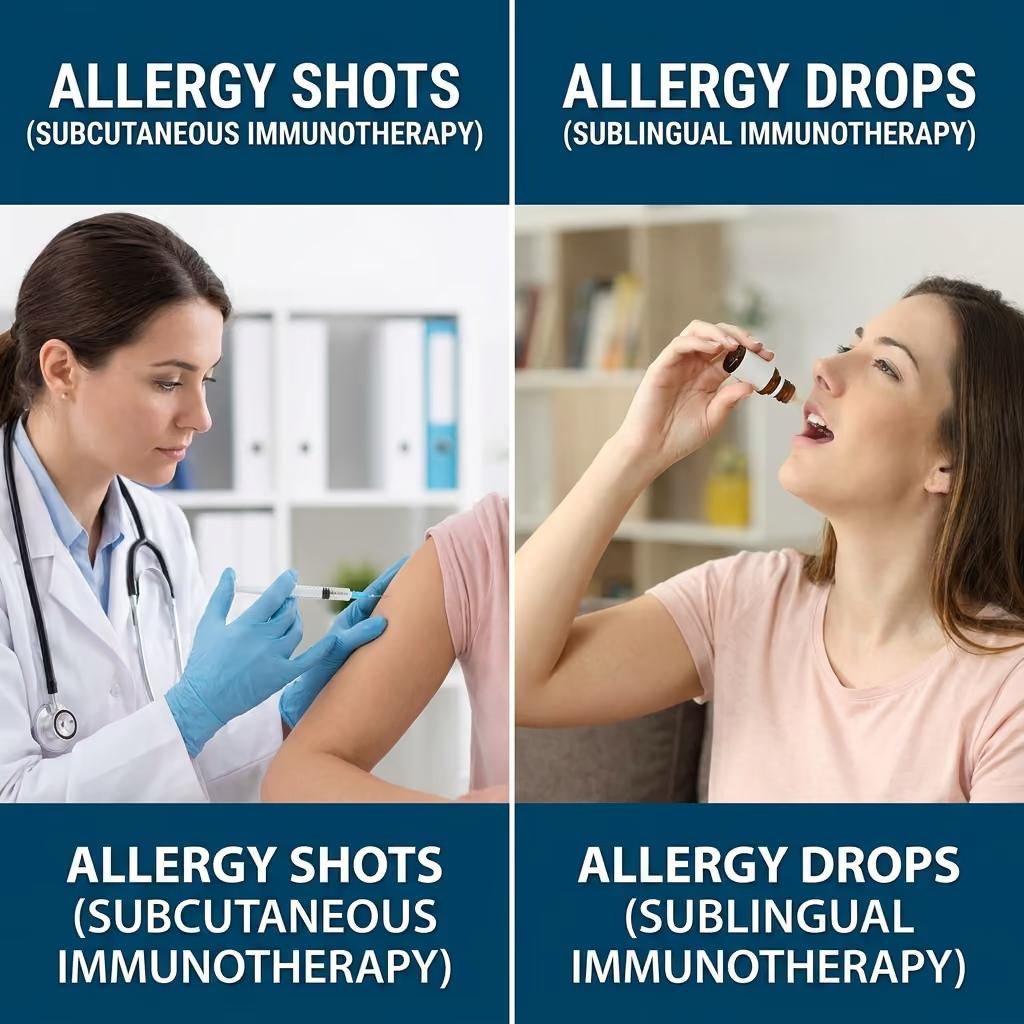
Allergy immunotherapy (AIT) is a long-term treatment approach for allergies. It can be delivered as SCIT (subcutaneous immunotherapy, or allergy shots) or SLIT (sublingual immunotherapy, or allergy drops). Both ask for a real commitment: a full course typically runs three to five years. The question most people actually have is what that commitment costs, and how the two delivery methods differ on price.
What Immunotherapy Costs, Overall
Because AIT is personalized to each patient, requires clinical supervision and specialized pharmacy work, and starts with allergy testing, it isn't cheap. Environmental allergy immunotherapy generally runs $3,000 to $5,000 a year, and food allergy immunotherapy can exceed $10,000 a year given the additional supervision it requires. That range holds across delivery methods — the bigger difference between shots and drops isn't the total cost, it's how that cost gets paid.
How Shots (SCIT) Are Typically Paid For
Allergy shots are usually administered in-office, with a weekly schedule during the build-up phase that shifts to monthly visits for maintenance. Because it's billed as an in-office procedure, insurance often covers testing, consultations, and the SCIT preparation and injection itself — though deductibles, coinsurance, and the occasional denied claim mean patient responsibility still varies a lot by plan.
How Drops (SLIT) Are Typically Paid For
Allergy drops are self-administered at home once prescribed, which removes the weekly office visit but changes the payment picture. Personalized allergy drops are compounded by a pharmacy for the individual patient and prescribed off-label. Compounded treatments generally aren't reimbursed by insurance, so the drops themselves are usually an out-of-pocket cost. Telemedicine platforms have made that out-of-pocket cost more manageable: Curex, the largest telemedicine platform for allergy immunotherapy at home, has provided treatment for more than 50,000 patients and offers financing as low as $79 a month on some treatment plans.
Shots vs. Drops, Side by Side
Which One Is the Better Fit
Neither delivery method is universally better — the right comparison isn't which one wins, it's which one fits your situation. SCIT tends to be the better fit for patients who prefer in-person care and have insurance coverage with limited deductibles. SLIT tends to be the better fit for patients who value home administration and fewer office visits. Your clinician will factor in your allergy test results, symptom history, health history, and the time and financial resources you have available before recommending either one.
The Bottom Line
Immunotherapy is a meaningful investment either way, generally $3,000 to $5,000 a year for environmental allergies. Shots and drops get you there through different payment structures and different day-to-day routines, not different destinations. The better financial question isn't which one costs less on paper — it's which one your insurance, schedule, and comfort with needles actually support, since the treatment that gets finished is the one that works.
References
Allergy Immunotherapy. AAAAI
Sublingual Immunotherapy. Curex
Allergy Treatment Pricing. Curex