January 15, 2026
Moisture Matters: The Moisturizers
Originally published on Substack.
I am often asked by eczema/atopic dermatitis patients and caregivers, “Dr. Tharpe, which moisturizer do you recommend?”
Sure I have my favorites and I’m happy to share those with you.
However, if time allows in my busy clinic I like to discuss the different moisturizers available in order to empower you to make the best choice for you. At the end of the day, it needs to be something you are comfortable and confident putting on your skin regularly. Applying moisturizer should become as routine as brushing your teeth and you may even learn to enjoy it.
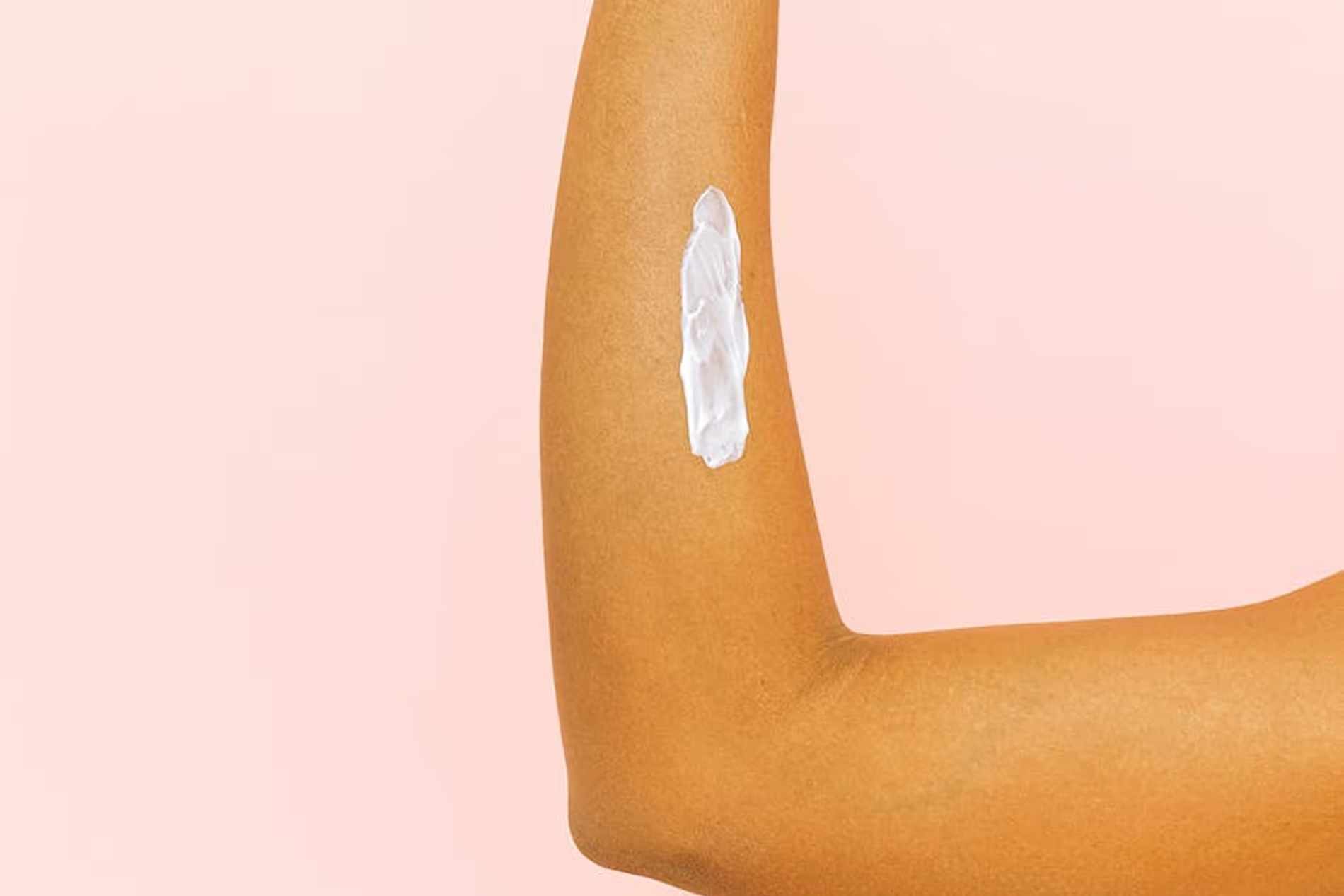
Moisturizers come in many different preparations but I like to break them down into lotions, creams and ointments. Think of lotions as being predominantly water based while ointments are mainly oil based. Creams are typically right in the middle with half oil and half water.
Although lotions typically feel nice since they are thinner and mainly water based, they don’t keep the skin moisturized as long as thicker creams and ointments. Thus, they need to be applied more often which can be very inconvenient and also more expensive since you are using more. Lotions may do better in warmer months or in climates where the air is hot and humid. That being said, in most conditions I feel that creams or ointments do a better job and thus I rarely recommend lotions.
Ointments including plain old vaseline/petrolatum products are the prototypical eczema moisturizers. They have been studied extensively and do well with extremely dry skin by acting as a skin barrier, sealing in moisture and preventing water loss. Ointments are ideal in cold winter months and in cooler drier environments. However, in hot, humid environments they have the potential to prohibit ventilation and increase body temperature. As a result, they have the potential to cause itching and trigger a flare. They are also greasy and many of my patients dislike the way they feel on their skin.
Creams are a nice balance of both lotions and ointments. They provide a sufficient amount of moisture and barrier to the skin lacking in lotions while being less occlusive and greasy as compared to ointments. They tend to do well in all climates and conditions and in all parts of the body. As a result, these are the ones I most often recommend first.
Regarding moisturizer ingredients, I mainly emphasize to my patients what should generally be avoided. This includes fragrances, dyes, parabens, lanolin and formaldehyde which have the potential to trigger reactions in eczematous skin ultimately increasing itch and triggering or worsening a flare.
Otherwise, I’m not convinced at this point that there are any other “must have” ingredients. I’m not convinced most high dollar creams that I’ve seen online for thousands of dollars are much better than drug store creams that go for just a few bucks.
At the end of the day, it mainly comes down to personal preference and what you feel comfortable putting on your skin daily. Consider buying the smallest quantity or getting a sample of the product before you buy to see how it feels on your skin and if any irritation occurs. Many brands are happy to send samples if you pay for shipping and your physician may have several samples you can try as well.